Living in Old Town Scottsdale: A Real Estate Guide for Buyers in 2026
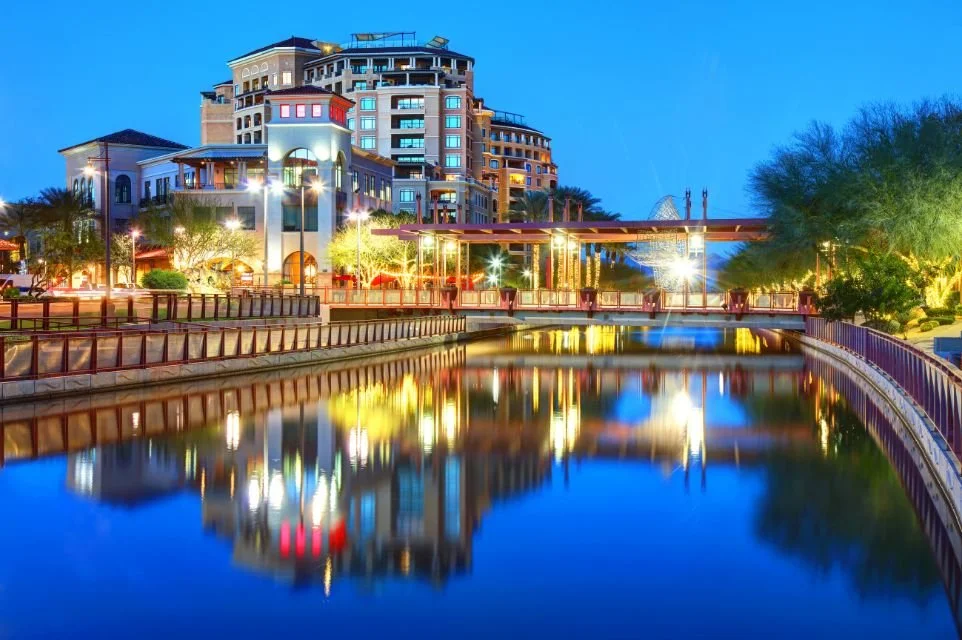
Old Town Scottsdale is one of my primary markets, and for years my office sat right in the middle of it. I've walked most of these blocks more times than I can count, shown property in nearly every micro-district covered in this guide, and I currently have a townhome listed in Villa Adrian, one of the small gated communities tucked into the west side.
Old Town doesn't work like a typical suburban neighborhood. It functions more like a compact urban district layered into the middle of the Valley, and the version of it someone experiences depends entirely on which few blocks they spend their time in. A condo near the Waterfront and a patio home west of Scottsdale Road might both carry an Old Town address, but they're not really the same market, and treating them as one is where a lot of buyers get their expectations wrong.
This guide covers what Old Town actually is, block by block, what the real estate landscape looks like heading into the second half of 2026, and what I'd want a buyer or seller to know before they make a decision here.
“Old Town remains one of the few neighborhoods in Arizona where daily life can genuinely be built around walkability.”
What Exactly Is Old Town Scottsdale?
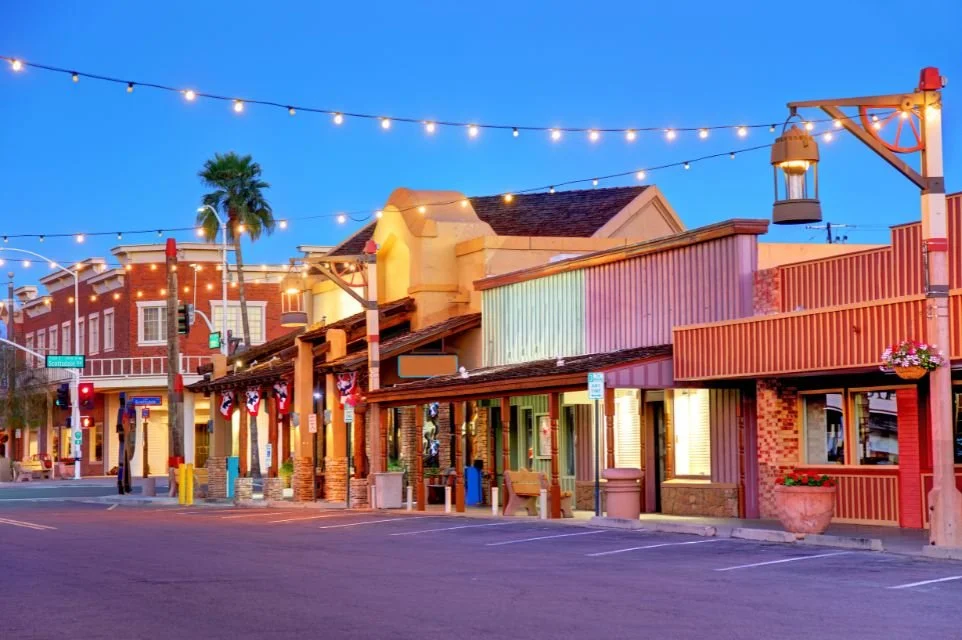
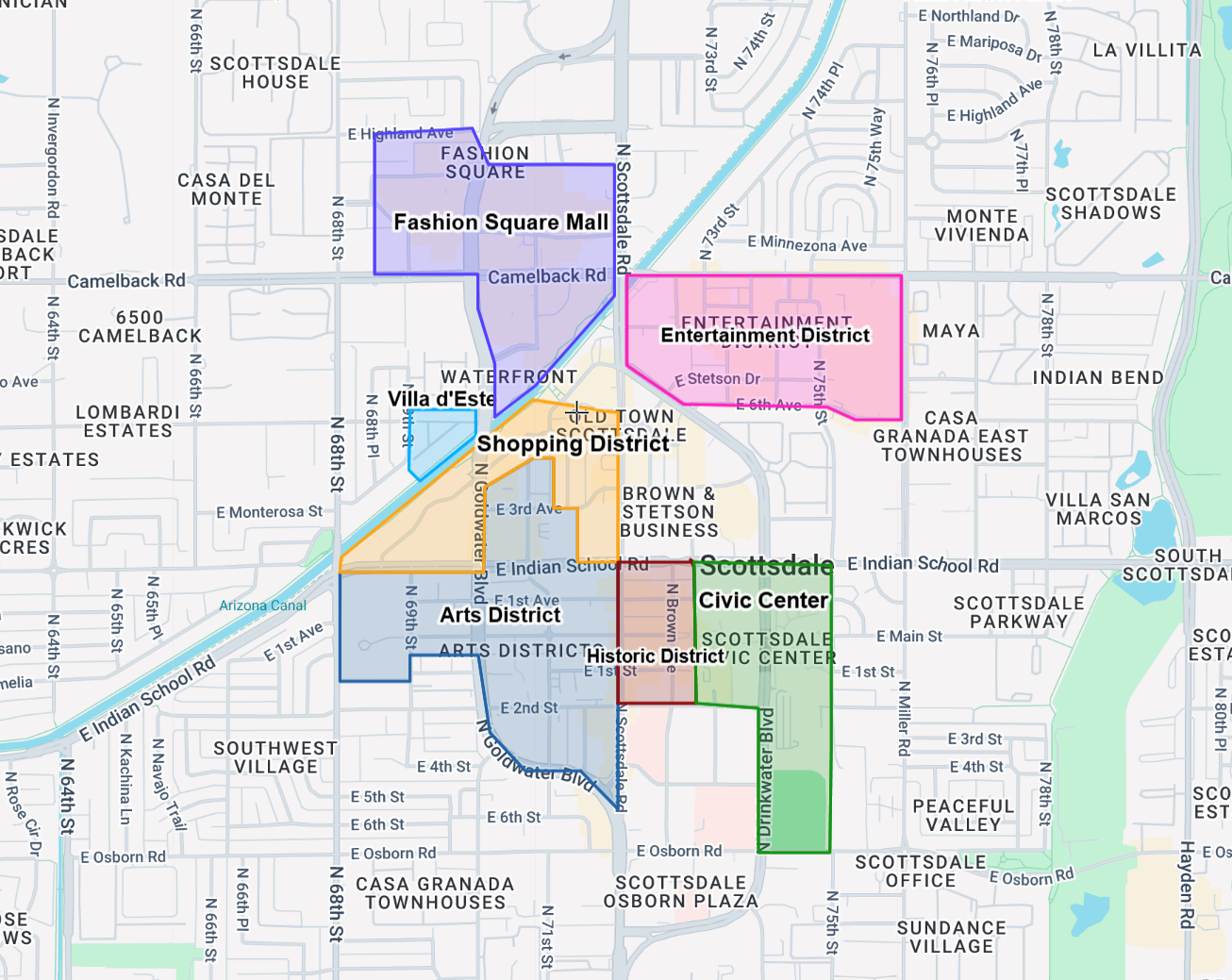
Old Town is Scottsdale's original downtown core, centered around Scottsdale Road, Camelback Road, and the Arizona Canal. The whole district covers roughly one square mile, but it packs in an unusual amount of retail, hospitality, entertainment, and residential product for that size.
I think of it as six smaller neighborhoods stitched together rather than one district. The Arts District sits west of Scottsdale Road, where the city's identity as an art town took shape back in the 1960s and still shows in the galleries lining the streets. Fifth Avenue is the shopping strip just north of that, dense with boutiques and the kind coffee shops locals love. The Waterfront runs along the canal and leans more luxury and mixed-use, condos and restaurants built around the water rather than the older gallery streets. The Entertainment District sits on the east side of town, and it's exactly what it sounds like: younger, louder, the part of Old Town that shows up in a bachelorette party itinerary. The Civic Center area anchors south with the park and the Museum of Contemporary Art. And west of Scottsdale Road, particularly around Exeter Boulevard, the district turns quieter and more residential, home to communities like Villa D'Este, Villa Adrian, The Phoenician, and just west across the city line the single family neighborhood Arcadia Proper.
That layering is part of what makes Old Town hard to generalize about. A buyer can pick a version of the lifestyle here without ever leaving the district, but "Old Town" as a single label hides more than it explains.
Fashion Square and the Luxury Shift
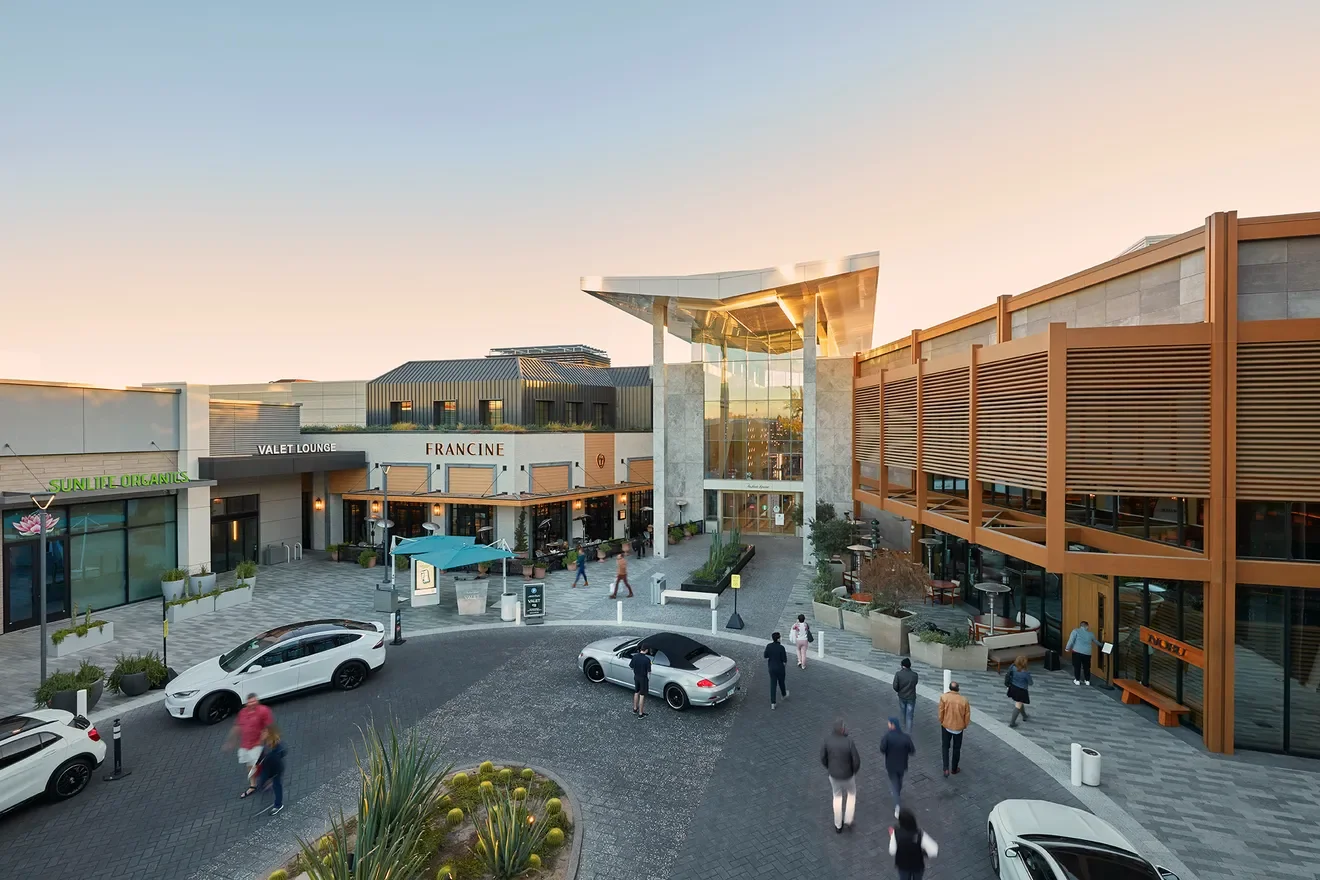
Scottsdale Fashion Square is the mall at the corner of Scottsdale Road and Camelback Road, and it's the single biggest driver of what Old Town has become. It opened in 1961 and has spent the last twenty years repositioning itself into one of the most luxury-oriented retail destinations in the country. The mall now covers close to 1.9 million square feet with more than 200 stores, and it consistently ranks among the highest-grossing malls in the United States.
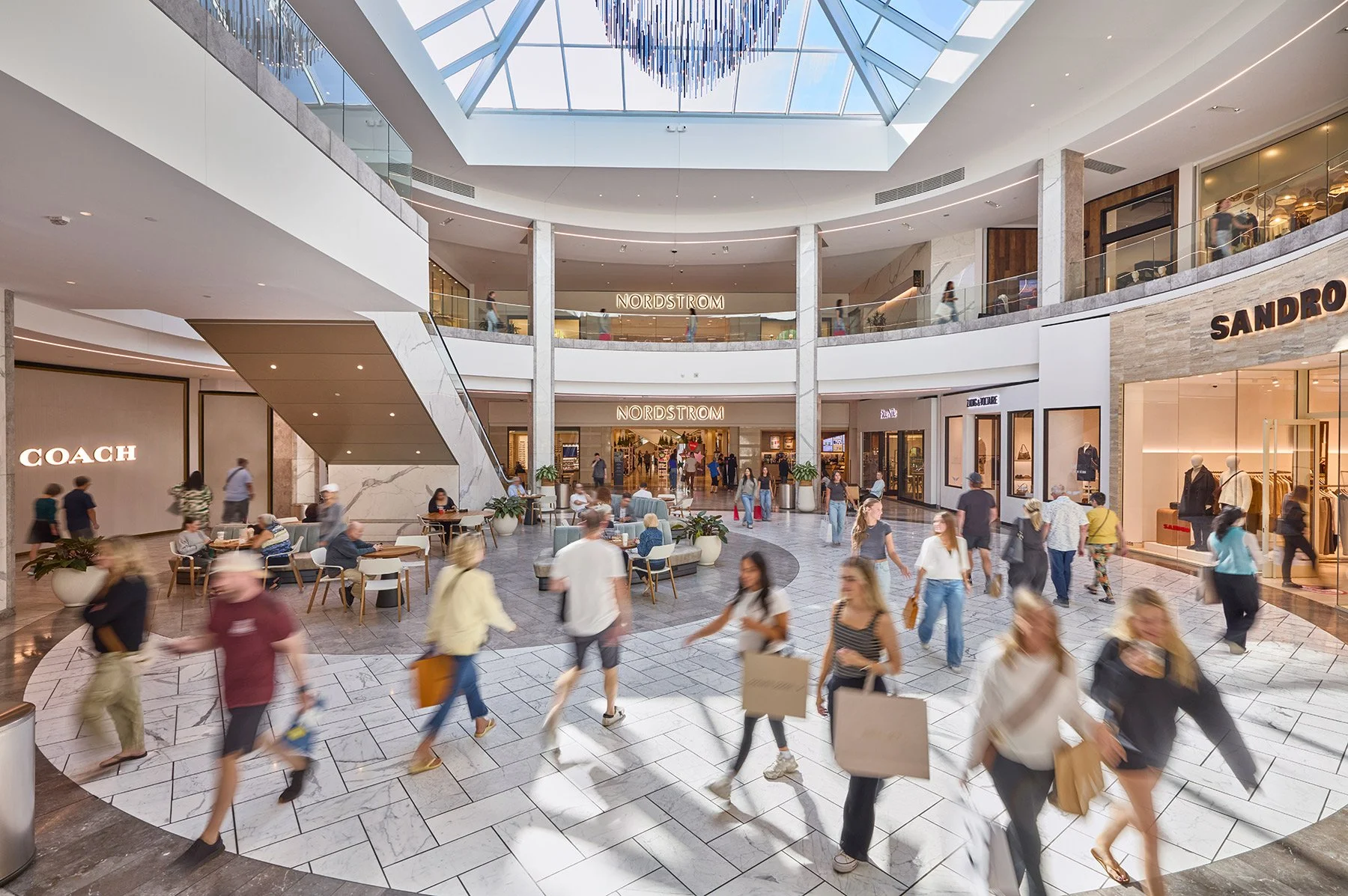
I watched a lot of this transformation happen in real time from an office a few blocks away. Hermès, Gucci, and Versace moved in. Nobu, Ocean 44, and Catch opened on the property. Din Tai Fung opened this spring, and Life Time added a luxury athletic resort as part of the broader push upscale. Caesars Republic Scottsdale opened right on the property in 2024, giving Fashion Square its own hotel for the first time and adding to the growing list of places to stay within walking distance of Old Town's core. I go into more detail on where to stay in Old Town in my hotel guide. Macerich is mid-construction on another renovation right now, a redesign of the Palm Court that started in January 2026 and is expected to wrap before the holidays, and the company has longer-term plans for a mixed-use expansion on a seven-acre parcel north of the mall that would add residential, office, and hotel space. The corridor around Fashion Square increasingly functions like a compact luxury lifestyle district rather than a traditional mall anchor, and that shift has pulled residential demand along with it. Buyers who want walkable access to that level of retail and dining pay a real premium for proximity, and the properties closest to Fashion Square have felt that pressure the most directly.
The Real Estate Landscape in 2026
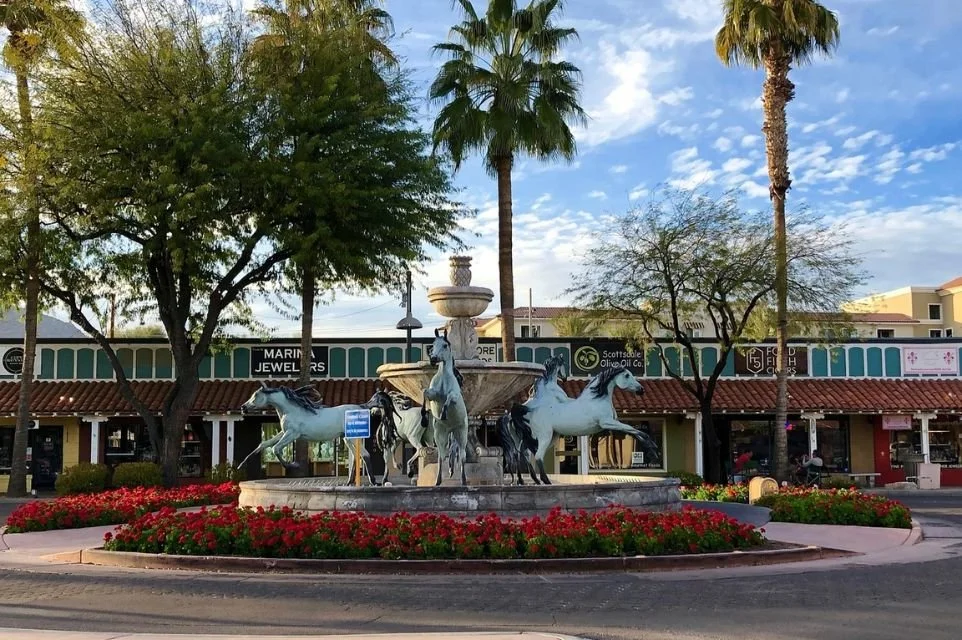
Scottsdale Road is the real dividing line in Old Town, and the two sides don't behave the same way.
East of Scottsdale Road, roughly out to Hayden Road, density goes up and prices come down. This is where most of the condo product sits, a lot of it running along the Indian Bend Wash greenbelt, and it's the part of Old Town where a buyer can still find something relatively affordable without leaving the district entirely.
West of Scottsdale Road is a different market. Lots get bigger, product shifts toward single-family and low-density patio homes, and prices climb. This side is also home to the handful of gated townhome communities that come up constantly in conversations with buyers who want something quieter: Villa D'Este and Villa Adrian near Exeter Boulevard, Pavoreal a few blocks from Fashion Square, and the Phoenician communities near the base of Camelback Mountain. The Phoenician side alone covers a few different products worth knowing apart from each other. The original villas date to the 1980s and sit on the golf course. Ascent at The Phoenician is the newer luxury development next door, and its newest release, Camelback Residences, just hit over 95 percent sold with construction complete, 60 units running from one-bedroom-plus-den up to three-bedroom-plus-den, all adjacent to the resort and steps from the mountain.
Head south past Osborn Road and the whole market shifts again. Prices ease and the product gets a little less polished. This is also where Old Town's short-term rental inventory concentrates most heavily, and it's a genuine source of friction with full-time residents in that part of the district. Worth knowing going in, whether the plan is to live there full time or buy with rental flexibility in mind.
The 85251 Market
I pulled the current Cromford numbers for 85251, and it's worth noting upfront that this data covers single-family homes only. Condos, townhomes, and the gated communities covered earlier in this guide run on their own separate numbers, but the single-family trend is still a useful read on where the broader Old Town market stands right now.
The short version is that this market has cooled meaningfully from where it sat a year or two ago. Active listings sit at 90 right now, down from 120 last month, but still well above the 74 on the market two years ago. Homes are taking longer to sell. Days on market for closed sales has climbed to 116, nearly double the 59 days it took two years ago, and active listings are sitting an average of 150 days before going under contract. Months of supply has crept up to 4.0, compared to 2.7 two years ago, which puts this closer to a balanced market than the seller's market Old Town was running through recent years.
Pricing tells a similar story. Median sale price sits at $867,000, down from $915,000 a year ago. Annual appreciation on price per square foot is actually negative right now, down 1.5 percent year over year, and the median price appreciation figure is down 5.2 percent. Sellers are also giving up more ground at the negotiating table. The average sale-to-list ratio has dropped to 94.65 percent, compared to 98 percent two years ago.
None of that means the market is weak. Annual dollar volume for the zip code still runs $359 million, and 239 homes closed over the past year. It means the frenzy pricing of a couple years ago has eased, buyers have more room to negotiate than they've had in a while, and sellers who want to move a property need to price it accurately rather than testing the market. For anyone buying or selling a single-family home in this part of Old Town, that's the environment to plan around right now.
If you own in Old Town and are weighing a sale, here's how I price and market homes in this kind of market. For the wider picture, see my latest Scottsdale and Phoenix market update.
Thinking About Buying in Old Town Scottsdale?
Navigating Old Town requires understanding the difference between micro-locations, building quality, walkability, and long-term positioning. Two properties only a few blocks apart can function very differently from both a lifestyle and investment perspective.
If you’re considering buying, selling, or investing in Old Town Scottsdale and want a clearer understanding of how the market is evolving in 2026, the best place to start is a conversation.
Here's how I represent buyers in Old Town and across Scottsdale.
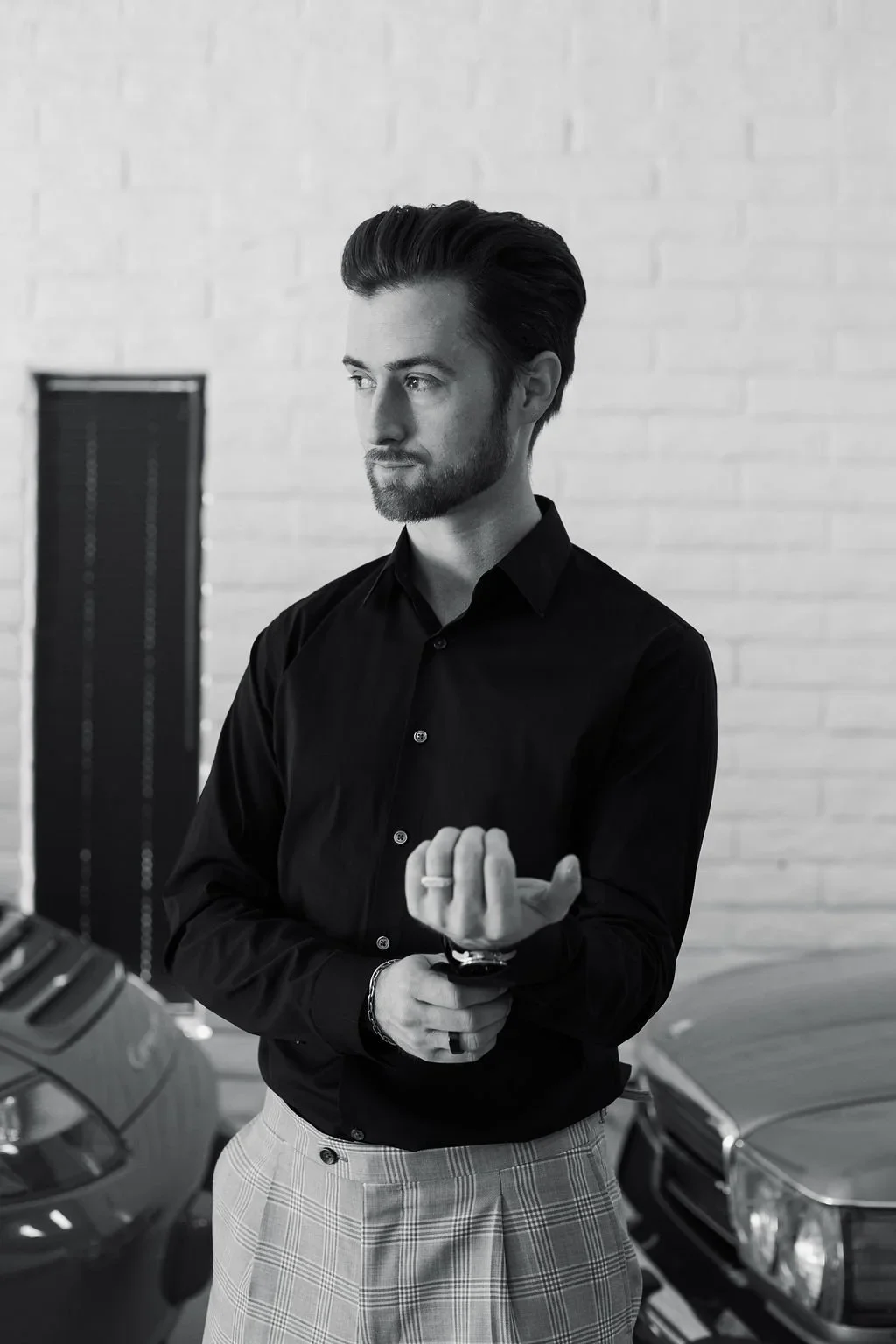
Cody Wolfe is a real estate broker and Partner at The Agency Scottsdale, representing buyers and sellers across Scottsdale, Paradise Valley, McCormick Ranch, and Arcadia.