Paradise Valley, AZ: Homes, Zoning & Real Estate in Arizona's Most Restrictive Town
Paradise Valley is the wealthiest city in Arizona and the fifth wealthiest suburb in the United States. Its 85253 zip code has held Arizona's most expensive spot for seven straight years and currently ranks 23rd nationally, the only zip code in the state to crack the top 100. Median household income runs just over $200,000, and the average clears $385,000. Cherokee Elementary, which sits inside the town limits, ranks better than 99 percent of Arizona elementary schools and carries National Blue Ribbon recognition.
The town draws Fortune 500 executives alongside the kind of athletes and entertainers who could live anywhere in the country and specifically choose a place where nobody bothers them. Twelve thousand people across fifteen square miles, walled off behind mature landscaping on acre lots, five minutes from Old Town Scottsdale and twenty from Sky Harbor.
What it doesn't have is a downtown. No grocery store, no gas station, no strip mall anywhere inside the town line, because Paradise Valley has no commercial zoning district at all. The town repealed its only commercial district decades ago, and everything operating here now, the resorts, the golf courses, the handful of medical offices, does so under an individually negotiated Special Use Permit rather than by right. Retail never made the list.
That absence is the whole point. In 1961, residents scattered around Camelback and Mummy Mountain watched Phoenix and Scottsdale expanding toward them and incorporated to stay out of both. The zoning code they wrote set one house per acre as the standard and has governed the town ever since. Six decades later, it still decides what gets built here, what it costs, and why two houses carrying the same price tag can be completely different assets.
I grew up in Paradise Valley and have owned investment property here, so most of what follows comes from time on the ground rather than a data pull.
What Exactly Is Paradise Valley?
Paradise Valley is an independent municipality in Maricopa County, not a district of Scottsdale or Phoenix. It was incorporated on May 24, 1961, after residents formed a citizens' committee specifically to avoid being annexed by its two larger neighbors. That founding motive matters because it shaped the zoning code that followed: low-density residential use as the default, one house per acre as the standard, and no commercial zoning district at all. The town covers 15.4 square miles and had a population of 12,658 at the 2020 Census, with the town's own 2025 estimate putting it at 12,774.
Is Paradise Valley part of Scottsdale? No. Paradise Valley is its own incorporated town in Maricopa County, established in 1961, with its own mayor, council, and zoning authority. It borders Scottsdale and Phoenix and gets grouped with Scottsdale casually because the two share zip codes, school districts, and a lot of daily life, but they're separate governments.
There's a second, more common mix-up worth clearing up directly. The Town of Paradise Valley is not the same place as Paradise Valley Village, a district of the City of Phoenix that sits several miles north. Paradise Valley High School, Paradise Valley Community College, and the now-demolished Paradise Valley Mall all carry the name but sit inside Phoenix, not inside the town. Even the Paradise Valley Unified School District, despite its name, doesn't serve the town itself. If a listing or a school search points you toward any of those, you're looking at the Phoenix village, not the town where one-acre zoning and Camelback Mountain estates live.
Where Is Paradise Valley?
The town sits directly between Scottsdale and Phoenix, wrapped by both. Camelback Mountain anchors the southern edge, Mummy Mountain rises near the center, and the boundary roughly follows Tatum Boulevard to the west, Scottsdale Road to the east, Lincoln Drive and McDonald Drive running through the middle of the town, and Doubletree Ranch Road marking parts of the northern edge. Nearly the entire town carries a single zip code, 85253.
One wrinkle worth knowing before you assume an address is in town: the stretch north of Mountain View Road and south of Shea Boulevard carries a Paradise Valley mailing address but sits outside the town limits. Those homes answer to a different jurisdiction, with different zoning, different services, and a different police department, even though the postal address reads the same. Verify the actual jurisdiction on any property up there rather than trusting the address alone.
What that means in practice: Old Town Scottsdale and Scottsdale Fashion Square sit a short drive southeast, Arcadia and the Biltmore area sit just southwest across the Phoenix line, and downtown Phoenix and Sky Harbor International Airport are roughly 15 to 20 minutes south under normal traffic. None of those drive times hold during rush hour or a Barrett-Jackson week, but the geographic reality is that Paradise Valley sits at the center of the Valley's map, not off to one side of it.
How Paradise Valley Got Its Zoning Code
By the late 1950s, Phoenix and Scottsdale were both expanding fast, and the rural residents scattered around Camelback and Mummy Mountain didn't want to get pulled into either city. A citizens' committee petitioned Maricopa County for incorporation, and the county granted it in May 1961 with a population of around 2,000. The first town council spent its early years doing one thing: building a zoning code that would keep the area low-density and residential, permanently.
That code still runs the town. Roughly two-thirds of Paradise Valley's land carries R-43 zoning, meaning a minimum of 43,560 square feet, one acre, per single-family home. A smaller share of older, pre-zoning parcels carry R-35 designations at 35,000 square feet. The town did once have a commercial district on the books, a C-1 designation, and repealed it. What's left is a Special Use Permit process that allows a narrow set of non-residential uses on a case-by-case basis: resorts, country clubs and golf courses, medical offices, veterinary clinics and kennels, religious facilities, and private schools. Retail isn't on that list, which is why you won't find a shopping plaza or a grocery store anywhere within the town line. Sloped and hillside parcels answer to a separate set of rules, the town's Hillside Development Regulations, administered by a dedicated Hillside Building Committee that reviews grading, retaining walls, and height on a lot-by-lot basis.
The result is a town that looks and functions almost entirely on its own terms. Nothing about it happened by accident. Every rule traces back to a single goal the founding council set in 1961 and never revisited: stay residential, stay low-density, permanently.
What Living in Paradise Valley Actually Feels Like
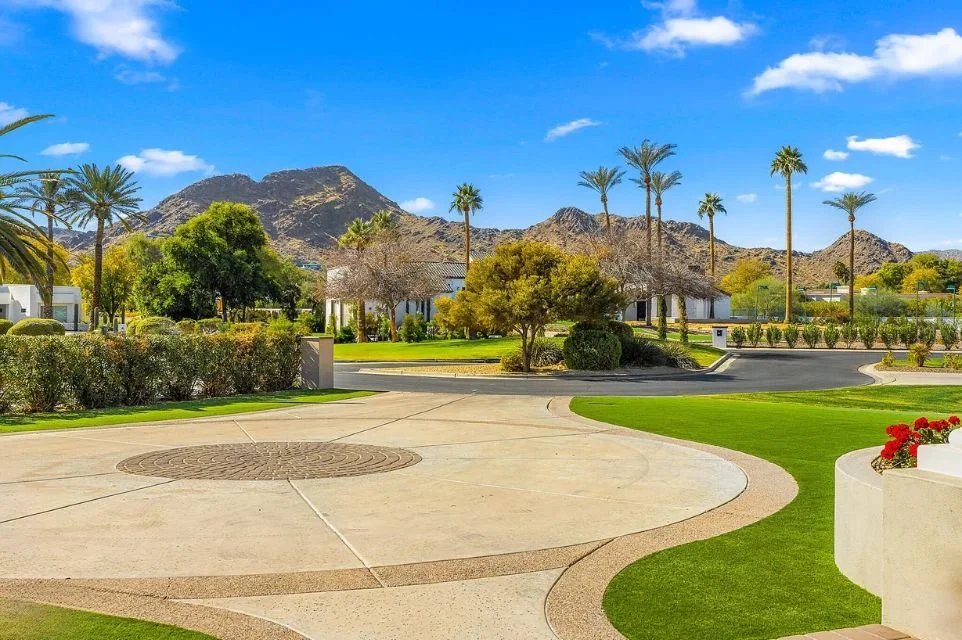
Day to day, Paradise Valley is a driving town. Lots run large, setbacks run deep, and a lot of interior streets have no sidewalks at all. There are no streetlights either, which is one of the first things people notice at night. That's not an oversight, it's a byproduct of the same low-density zoning that keeps lots at an acre. Homes sit back from the road behind mature landscaping, block walls, or natural desert grade, and on many streets you can't see a neighboring house from your own front door.
The privacy is a large part of why the town draws the residents it does. Paradise Valley has a long history of attracting athletes, entertainers, and executives who could live anywhere and specifically want to be left alone. The zoning delivers that better than a gate does, and nobody in town makes a thing of it.
The Paradise Valley Police Department is a real part of the appeal, and it comes up in client conversations more than people expect. The department is small, well funded, and genuinely responsive, running vacation checks on homes while owners travel and wellness checks on residents who ask for them. In a town built around seasonal owners and large, private lots, that level of service does more practical work than a guard gate.
There's no walkable retail corridor inside the town line, because the town has no commercial zoning to allow one. What the town does have, instead of storefronts, are resorts, each functioning as a quasi-town-center with a restaurant, a spa, and a bar that residents actually use on a regular basis. If you ask a longtime Paradise Valley resident where they get coffee or grab dinner without leaving the area, the honest answer is usually a resort restaurant, not anything else inside the town itself.
The tradeoff is straightforward. You give up walkability and you give up density. What you get in exchange is privacy that's built into the zoning rather than bolted on: acre lots, deep setbacks, mature landscaping, and in a lot of cases a gate or a wall, all working together rather than one amenity doing the job alone.
Camelback Mountain, Mummy Mountain & the Geography of Value
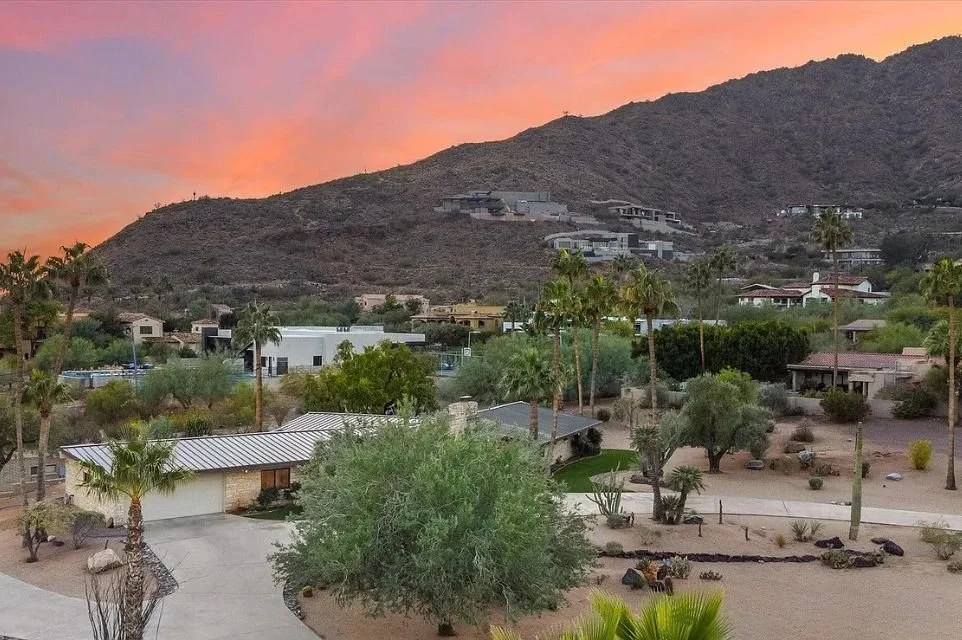
Camelback Mountain sits along the town's southern edge and Mummy Mountain rises closer to the center, and together they do more to shape Paradise Valley real estate values than any single amenity in the town. The distinction that matters here is between owning near a mountain and owning on one. A flat lot two streets back from Camelback still carries the address and the general desirability of the area. A true hillside parcel, one that's actually built into the slope, comes with a different cost structure and a different review process entirely, because it falls under the town's Hillside Development Regulations rather than standard zoning.
Hillside construction means retaining walls, engineered drainage, cut-and-fill grading, and in many cases no direct access to town water or sewer, which pushes the builder toward a well or septic system. All of that adds cost before a single finish is chosen, and it's a major reason hillside estates in Paradise Valley run well above flat-lot pricing per square foot. View quality also varies more than buyers expect from one lot to the next. A property one street over, or a hundred feet higher on the same street, can have a materially different sightline to the city lights or the mountain face. When I walk a hillside lot with a client, the first thing I'm checking isn't the house, it's the building envelope: what the Hillside Building Committee will actually allow you to build, and where on the lot the best view corridor sits before you've spent a dollar on design.
Paradise Valley Homes & Architecture
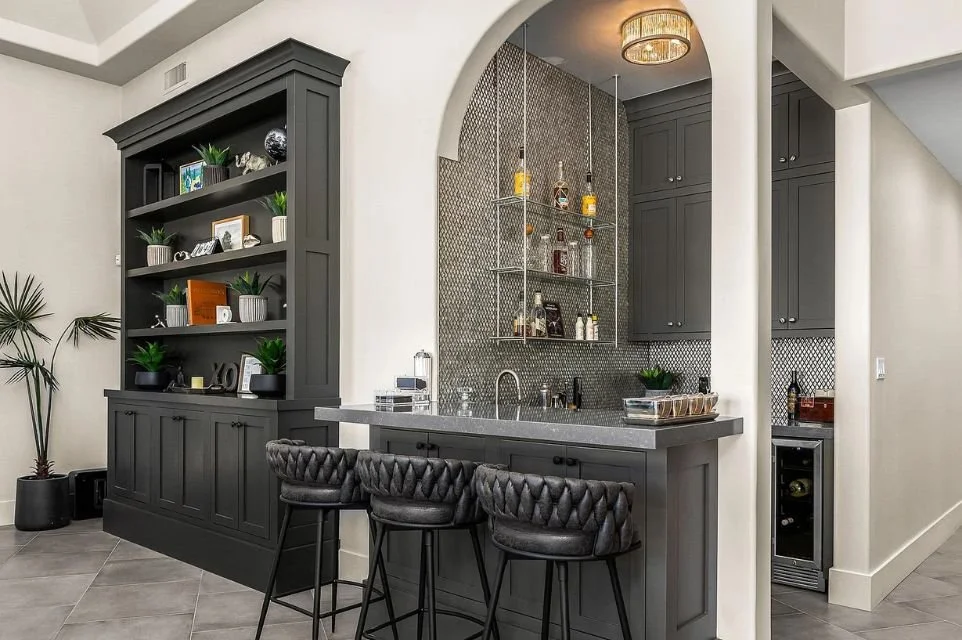
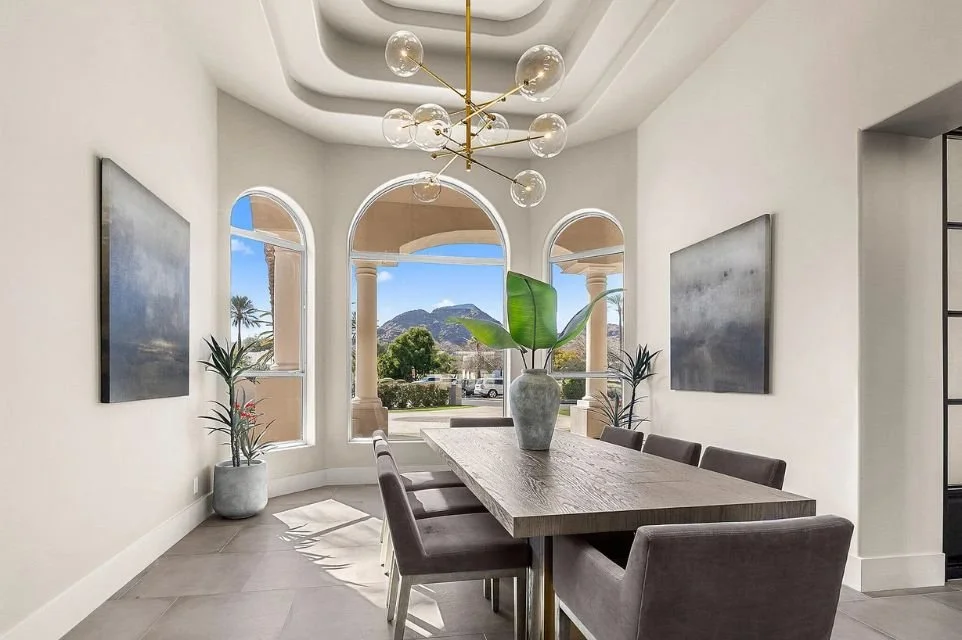
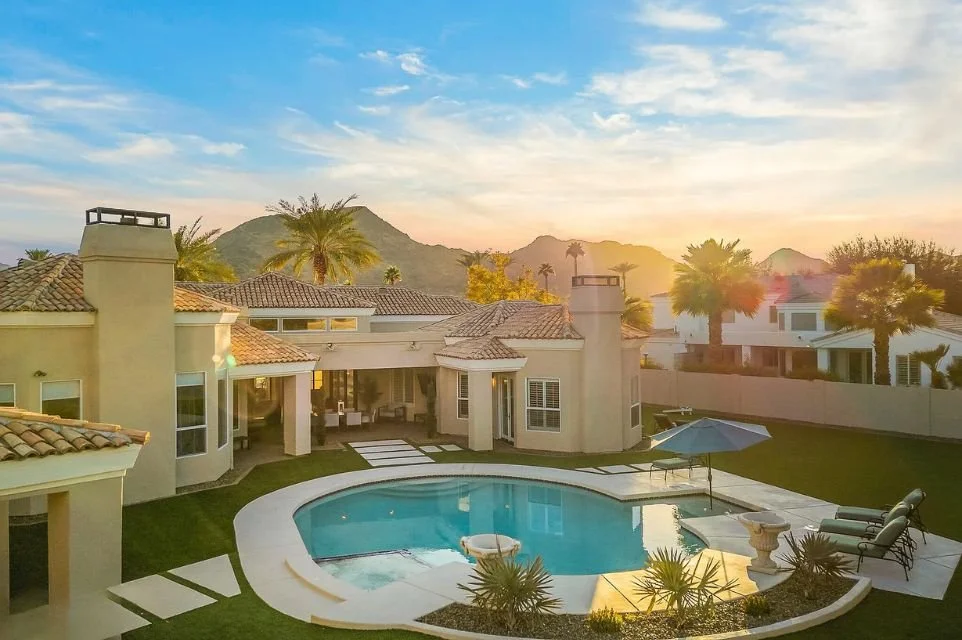
The housing stock in Paradise Valley spans several distinct eras rather than one dominant style. You'll find mid-century ranch homes from the town's earliest development period, Territorial and Southwestern adobe-style homes, Mediterranean and Tuscan-influenced estates built during the boom years of the 1990s and 2000s, and a growing wave of contemporary desert architecture and full custom new construction on redeveloped lots.
That redevelopment pattern is worth understanding on its own. Because land, not square footage, carries most of the value on an acre-plus Paradise Valley lot, older homes in strong locations are frequently purchased for the land itself, then substantially renovated or torn down entirely for new construction. This is common enough that comparing two Paradise Valley homes on square footage alone tells you almost nothing. A 1970s ranch on a flat acre near Camelback and a newly built contemporary estate on a hillside lot half a mile away can carry similar price tags for entirely different reasons: one for its land and redevelopment potential, the other for its construction, view, and finish level. Lot size, view quality, location relative to the mountains, construction quality, guest houses, sport courts, and outdoor living space all matter more here than raw square footage.
Paradise Valley Lots, Acreage & Why Land Matters So Much
Land is the foundation of value in Paradise Valley in a way it simply isn't in most Phoenix-area markets. The R-43 zoning that covers most of the town sets a one-acre minimum, and that minimum has shaped buyer expectations for six decades: an acre-plus lot isn't a premium feature here, it's close to the baseline in much of the town.
Not every parcel is created equal, though, and this is where I'd push back on any generic acreage sales pitch. A flat, rectangular acre with good street exposure and easy utility access is a very different asset from a sloped or irregular lot that requires hillside review, a long private driveway, or its own well and septic. Setbacks, road exposure, drainage patterns, and what utilities actually reach the lot line all affect what you can build and what it will cost to build it. Before assuming acreage translates directly into usability or redevelopment value, those specifics need to be verified against the parcel, not assumed from the listing sheet.
Gated vs. Non-Gated Paradise Valley
aradise Valley is not a single gated development, and it's not one master-planned community with uniform architecture. It's a town made up of roughly seventy individually developed neighborhoods, some gated and guard-staffed, many not gated at all and relying on lot size, setbacks, and terrain for privacy instead.
The town's own gated communities map lists more than a dozen guard-gated or gated enclaves, including Casa Blanca Estates, Cheney Estates, Cheney Place, Clearwater Hills, Colonia Miramonte, Desert Jewel Estates, Elmaro Estates, Finisterre, Judson, and La Place du Sommet on Mummy Mountain, among others. These vary widely in size and character. Judson, for example, is one of the smallest and most tightly held, a legacy enclave with well under thirty homes on deep lots that rarely change hands. Clearwater Hills sits higher into the terrain along the Phoenix Mountain Preserve and trades partly on elevation and view. Each of these communities carries its own HOA, its own architectural review process, and in most cases its own security setup, and none of that is standardized across the town. Gated doesn't automatically mean more valuable in Paradise Valley. Plenty of the town's most desirable addresses, including some of the largest estate lots near Camelback, sit on open, non-gated streets where privacy comes entirely from setback and landscaping rather than a guard shack.
Paradise Valley Resorts & Why They Matter to the Town
The Town of Paradise Valley's own resort list includes the Camelback Inn (operated as a JW Marriott), the DoubleTree Paradise Valley Resort, the Hermosa Inn, the Kimpton Miralina Resort & Villas, Mountain Shadows, the Omni Scottsdale Resort & Spa at Montelucia, and Sanctuary Camelback Mountain. Several of these carry Scottsdale branding in their names despite sitting inside Paradise Valley's town line, which adds to the general confusion about where the town's boundary actually falls.
These resorts matter to residents well beyond tourism. Because the town has no commercial zoning, resort restaurants, bars, and spas function as the closest thing Paradise Valley has to a town center. Lon's at the Hermosa Inn, the dining rooms at Mountain Shadows, and the pool and spa circuit at Sanctuary and Montelucia are places residents actually use on a regular basis, not just where out-of-town guests stay for a week. When I'm walking a listing with a buyer, I'll often point out proximity to a specific resort not as a lifestyle amenity in the abstract, but because it's genuinely where that stretch of the town eats dinner.
Restaurants, Coffee & Everyday Conveniences
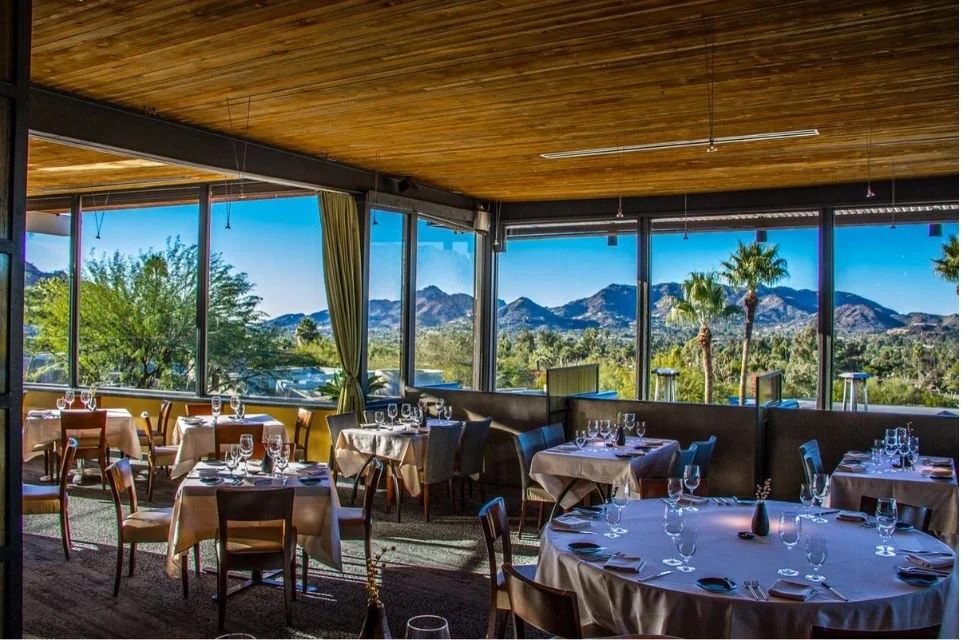
Because Paradise Valley itself carries no commercial zoning, day-to-day errands mean leaving the town line. Most residents handle groceries, everyday dining, and casual coffee runs in the retail corridors that border the town: Scottsdale Road and Old Town Scottsdale to the east, Lincoln Drive and the Biltmore area to the south and west, and Arcadia's restaurant strip along 44th Street and Indian School just across the Phoenix line. Scottsdale Fashion Square covers the bulk of shopping needs for residents on the east side of town.
For dinner without leaving the resort corridor, the restaurants attached to the Hermosa Inn, Mountain Shadows, and the Sanctuary handle a meaningful share of local demand, since they sit inside the town line even though the nearest grocery store doesn't. It's worth verifying current hours and operating status before recommending any specific business by name, since this corridor turns over restaurant concepts fairly often even when the resorts themselves stay put.
Paradise Valley Real Estate in 2026
Paradise Valley is a small, high-price market, and that combination makes its statistics volatile in a way that trips up anyone reading them the way they'd read Phoenix metro numbers. The town covers a single zip code, 85253, and closes roughly two to three dozen sales a month, which means one or two trophy estates can move a monthly median by seven figures.
Current ARMLS data for 85253 single-family detached, measured September 10, 2026: the annual median sale price sits at $4,300,000 and the annual average at $5,651,790, with median price appreciation running 10.3 percent year over year. Median annual sales price per square foot is $868.89, up from $797.96 a year ago. There are 139 active listings against 341 sales over the trailing year, putting months of supply at 5.7. Median days on market for closed sales is 101, and homes are selling at an average of 95.57 percent of list. Annual dollar volume for the zip code runs $1,927,000,000.
What those numbers don't capture is the spread underneath them. A teardown on a flat acre starts around $3,500,000 in most of the town, and the ceiling keeps moving. In July 2026, a 20,919 square foot estate on Mockingbird Lane closed at $40,238,000, roughly $1,924 per square foot, on just under two acres. Between those two points sits everything from original 1970s ranch homes to newly built hillside estates, and the median tells you almost nothing about which one you're looking at.
What Different Price Points Buy in Paradise Valley
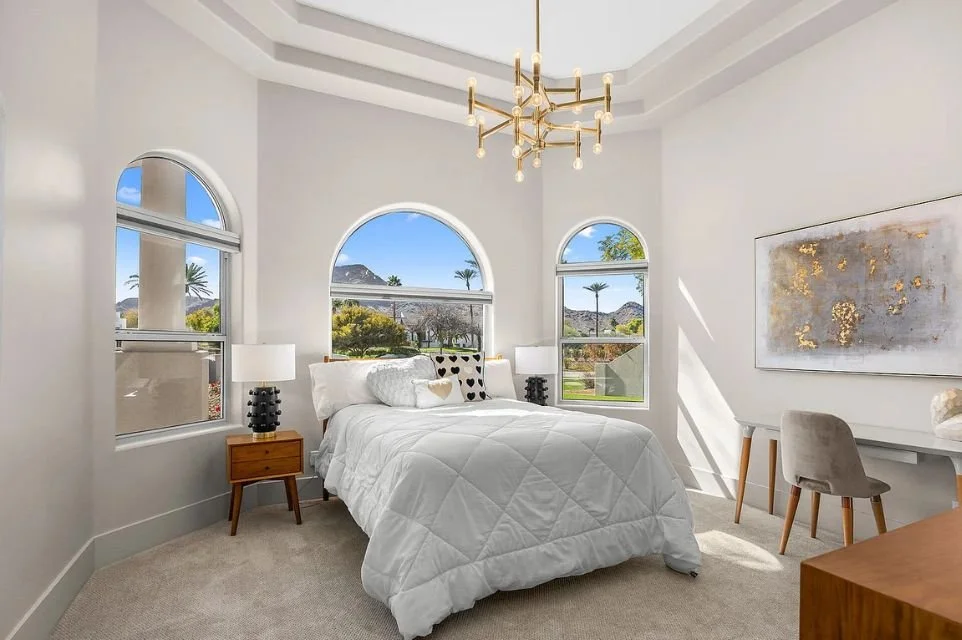
Price alone tells you less in Paradise Valley than almost anywhere else in the Valley, because the same dollar figure can buy fundamentally different things depending on lot, location, and condition. At the entry point, roughly $3,500,000 and up, you're usually looking at an older home, often original to the 1960s or 1970s, on a flat acre where the land is the real asset and the structure is a candidate for renovation or teardown. Move up and you start seeing renovated or moderately updated estates with real square footage and updated systems, but not necessarily a mountain view or a redeveloped footprint. Higher still, you're paying for a combination of new or substantially rebuilt construction, genuine hillside or mountain-adjacent positioning, and the kind of outdoor living space, guest house, or sport court that separates a strong Paradise Valley property from an average one. At the top, trophy estates combine acreage, true hillside or view-corridor positioning, architectural significance, and construction quality that few other markets in the state can match. The Mockingbird Lane sale in July 2026 closed at $40,238,000 for just under 21,000 square feet on two acres, which works out to roughly $1,924 per square foot.
The practical takeaway for a buyer: two Paradise Valley listings at the same price can represent completely different value propositions, one built around land and redevelopment potential, the other built around a finished, view-oriented estate. Knowing which one you're looking at requires walking the lot, not just reading the listing sheet.
Paradise Valley vs. Arcadia
Arcadia sits just across the Phoenix line from Paradise Valley's southwest edge and gets compared to it often, but the two feel different on the ground. Arcadia's lots run smaller than Paradise Valley's acre-plus standard, its streets are walkable to a genuine restaurant corridor along 44th Street, and its architecture leans heavily toward renovated and rebuilt ranch homes on a denser grid. Paradise Valley trades that walkability and density for larger lots, more separation between homes, and the mountain-adjacent estate character that Arcadia generally doesn't offer.
Pricing overlaps at the margins, an updated Arcadia home and an entry-level Paradise Valley property can land in a similar range, but the underlying asset is different: square footage and walkability in Arcadia, land and privacy in Paradise Valley.
Schools Serving Paradise Valley
Nearly all of the Town of Paradise Valley falls within the Scottsdale Unified School District, not the similarly named Paradise Valley Unified School District, which serves a section of northeast Phoenix and north Scottsdale several miles away and does not reach the town itself. This is one of the more common points of confusion for buyers relocating to the area, and it's worth double-checking directly with the relevant district before assuming a property's assigned schools based on name alone.
The schools that actually drive demand here are the three C's: Cherokee Elementary, Cocopah Middle School, and Chaparral High School. Cherokee sits physically inside Paradise Valley on 56th Street, rebuilt from the ground up in 2021 with voter-approved bond money, and it ranks better than 99 percent of Arizona elementary schools along with National Blue Ribbon recognition. Cocopah ranks better than roughly 92 percent of Arizona middle schools. That progression is a real factor in what families pay to be inside certain boundaries, and buyers who want it should confirm the attendance zone on a specific address rather than assuming a Paradise Valley address delivers it. Kiva Elementary also sits inside the town and carries its own strong reputation.
District boundaries can shift, and individual attendance zones vary by exact address even within the same district. Before purchasing, verify a specific property's assigned schools directly through Scottsdale Unified School District's boundary resources rather than relying on a neighborhood's general reputation.
Does Paradise Valley Have an HOA?
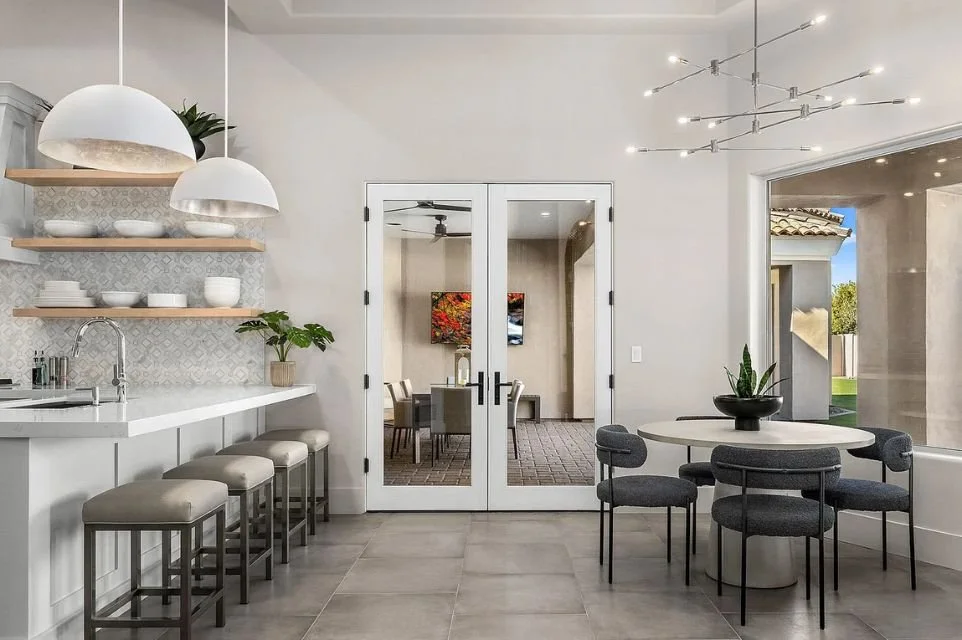
No single HOA covers the town, because Paradise Valley is a municipality, not a planned community. Some of its gated enclaves, including places like Clearwater Hills, Judson, and Cheney Estates, carry their own HOAs with dues, architectural review committees, and security arrangements specific to that community. Many non-gated streets and older estate neighborhoods have no HOA at all. Condominium and townhome developments within the town, where they exist, typically carry their own separate association structure as well.
Because there's no town-wide standard, HOA documents, architectural guidelines, transfer fees, and assessment amounts need to be verified property by property rather than assumed from a general reputation about the area.
What Buyers Should Look For Before Buying in Paradise Valley
Property-specific due diligence matters more in Paradise Valley than in almost any other Phoenix-area market, because the range of construction eras and lot conditions is so wide. On hillside or sloped lots, I want to understand the retaining wall and drainage situation before anything else, since grading problems on a hillside parcel are far more expensive to fix than a cosmetic issue inside the house.
Septic is the issue buyers underestimate most often here. A large share of the older ranch homes are still on septic systems, and so are most hillside properties, including newly built ones, because running sewer up a slope often isn't practical. Connecting a septic property to town sewer is not a minor line item. Depending on distance to the nearest main and what's between the house and the connection point, it can run into serious money, and that cost lands on whoever owns the house when the system finally needs replacing. On any property without a confirmed sewer connection, I want the septic system's age, capacity, and inspection history before the offer, not during escrow.
Older homes, particularly those from the 1960s through 1980s, deserve a close look at plumbing age, HVAC condition, and whether additions were permitted through the town rather than built without a permit, since unpermitted work becomes the buyer's problem at resale. Pool and irrigation systems on larger lots carry their own maintenance history worth tracing. And on any property being evaluated partly for its land or redevelopment potential, I want to confirm the actual zoning designation, R-43 versus an older R-35 parcel, along with setbacks and any hillside review requirements, before a client gets attached to a plan the town won't approve as drawn.
Building or Rebuilding in Paradise Valley
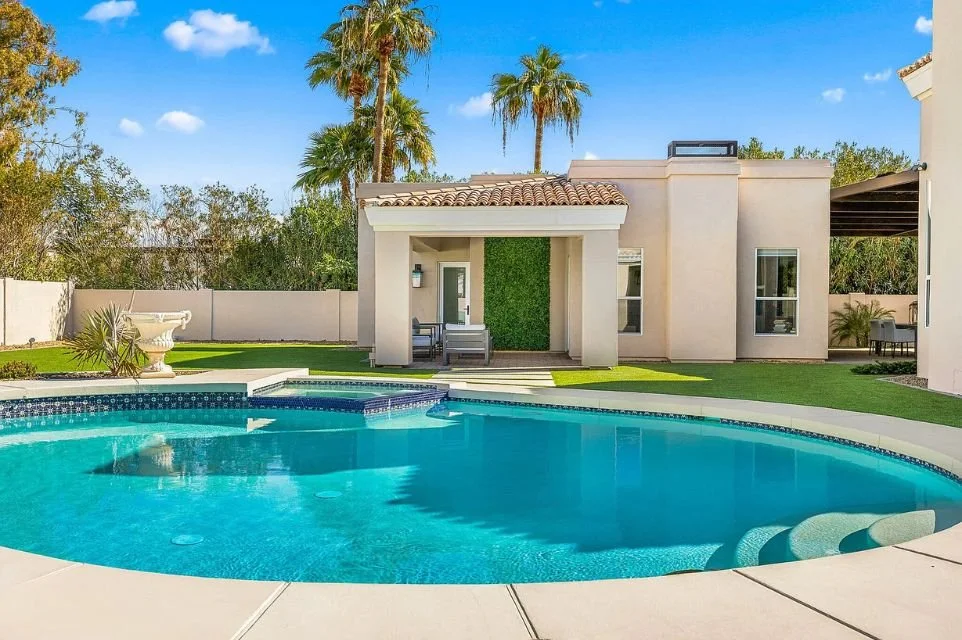
Buying land or an older home in Paradise Valley specifically to build new is common, but it comes with more regulatory steps than most buyers expect walking in. The one-acre R-43 minimum applies to most new construction, and the town caps total floor area as a percentage of lot size rather than leaving it open-ended. Sloped parcels trigger review by the Hillside Building Committee, which can affect height, grading, and retaining wall design before a permit is issued. Utilities are another common surprise: a meaningful number of Paradise Valley lots don't have direct access to town water or sewer, which means the buyer is responsible for a well, a septic system, or both.
None of this is legal or architectural advice, and specific setback, height, and floor-area figures should be confirmed directly against the Town of Paradise Valley's current zoning ordinance and building department before finalizing any plan. What buyers considering a teardown or ground-up build should understand going in is that land price is only one part of the cost equation here. Diligence on zoning, hillside status, and utility access needs to happen before the offer, not after.
Who Paradise Valley Makes Sense For
Paradise Valley tends to fit buyers who prioritize land, low-density surroundings, custom or architecturally significant homes, and a central position between Phoenix and Scottsdale over walkability or retail access. If mountain or city-light views matter to you and you're comfortable driving to dinner rather than walking to it, the town delivers something few other Phoenix-area markets can.
It makes less sense for buyers who want to walk to restaurants and shops, who'd prefer a gated golf community with resort-style amenities baked into an HOA, or who want newer planned-community inventory with more variety in price point and property type. Old Town Scottsdale or Arcadia generally serve the first group better. North Scottsdale communities built around golf, or planned developments like DC Ranch, Silverleaf, or Desert Mountain, generally serve the second and third.
What I Tell My Clients About Paradise Valley
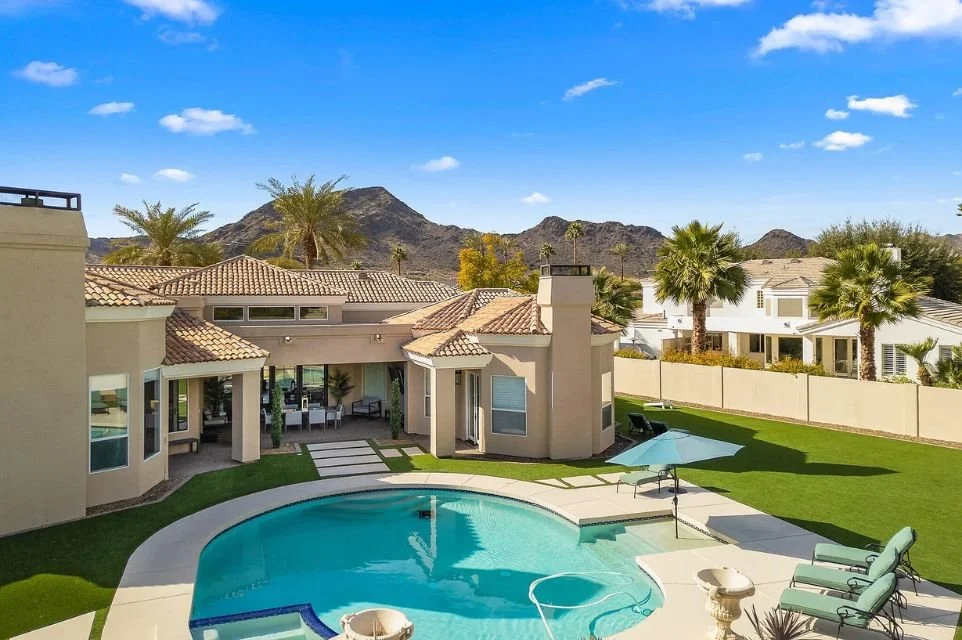
There's no such thing as an average Paradise Valley home, and I mean that literally, not as a sales line. One property's entire value case rests on a flat acre with redevelopment potential. The next derives most of its worth from a genuine Camelback Mountain view corridor that the house barely capitalizes on. Another might be a nearly new architectural build on a smaller, less remarkable lot, where the construction itself carries the price. A fourth might be an aging house whose highest and best use is simply the land underneath it.
Understanding which of those you're actually looking at requires knowing the specific street, the lot's topography and zoning designation, the condition of what's built on it, and what's actually closed nearby recently, not what the town's reputation suggests a property in that price range should be worth. That's the evaluation I walk through with every Paradise Valley client, whether they're buying land to build or a finished estate to move into. I grew up here and have owned property here, which mostly means I know which streets and which lots have problems that don't show up in a listing.
Paradise Valley remains one of the more unusual real estate markets in the Phoenix metro, not because of a marketing story, but because of a zoning decision made in 1961 that the town has never walked back. No commercial development, a one-acre baseline, and terrain that makes half its lots fundamentally different from the other half. Evaluating a specific property here means understanding the individual lot, its location relative to the mountains, its architecture, and its redevelopment potential, not comparing it to a generic median.
Thinking About Buying or Selling in Paradise Valley?
If you're looking at a property in Paradise Valley and want to understand how the lot, the location, the condition, and the asking price actually compare with the rest of the market, I'm happy to take a look with you.

Cody Wolfe is a real estate broker and Partner at The Agency Scottsdale, representing buyers and sellers across Scottsdale, Paradise Valley, McCormick Ranch, and Arcadia.